
Japan’s Ingenious Cardboard Beds: Dignity and Design in Times of Disaster
Hot News 25/10/2025 14:44
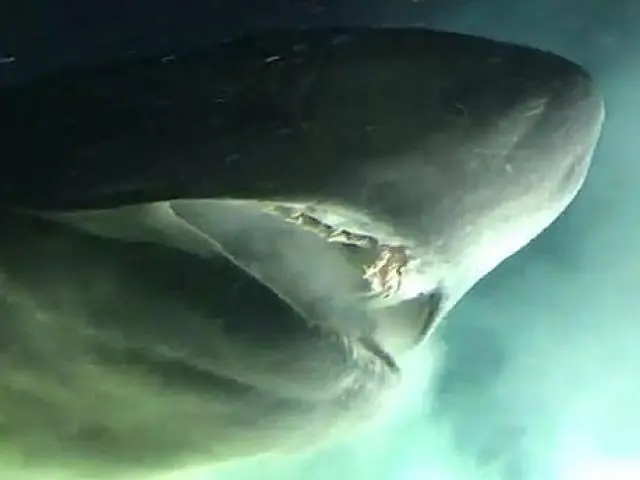
Ancient Giant in the Deep: Rare Encounter with Prehistoric Shark Captivates Scientists
A breathtaking deep-sea encounter has stirred fascination across the scientific community, offering a rare glimpse into one of the ocean’s oldest and most elusive predators. Captured by the OceanX exploration team, newly resurfaced footage reveals the awe-inspiring moment a bluntnose sixgill shark—an ancient species largely unchanged for over 200 million years—emerges from the abyss and circles a submersible vessel.
This living relic, a survivor of mass extinctions that ended the reign of the dinosaurs, glides silently through the darkness, drawn to the glow of the submarine’s lights. With its massive frame and cautious grace, the shark embodies the mystery of the deep sea—where few humans have ventured and even fewer species have been closely studied in their natural habitat.
Filmed in 2019 during an OceanX mission off the coast of Hawaii, this close encounter with a bluntnose sixgill shark marked a milestone in ocean research. Until now, much of what scientists knew about these sharks came from brief surface encounters or from bycatch collected by fishing operations. This time, researchers had a rare opportunity to observe the creature up close—and in its natural environment.
The most groundbreaking part? Scientists successfully attached a tracking device to the shark without removing it from the ocean depths. This innovation allows researchers to monitor the animal’s movements, behaviors, and habitat use without the stress and disruption caused by bringing it to the surface.
Scientifically known as Hexanchus griseus, the bluntnose sixgill shark is one of the largest and most ancient species of shark alive today. Measuring up to 20 feet in length, these deep-sea giants dwell at depths of over 6,000 feet and are equipped with six gill slits—an evolutionary throwback to their prehistoric ancestors.
They are rarely seen by humans and are known to be largely nocturnal, surfacing to shallower depths under the cover of darkness. Their elusive nature has made them notoriously difficult to study, until now.
The OceanX team, led by Dr. Dean Grubbs of Florida State University, developed a technique to tag the shark using a specially designed satellite device. Captured in the footage is the moment the massive predator glides up to the sub, gently nudging its hull as if inspecting its visitors. The researchers, calm and focused, seize the opportunity and successfully deploy the tag.
While the footage is undeniably awe-inspiring, its scientific significance goes far deeper. As apex predators, sharks like the bluntnose sixgill help regulate marine food chains and maintain the health of ocean ecosystems. However, due to slow reproduction rates and increasing threats from deep-sea fishing, they are highly vulnerable.
Tracking these sharks provides crucial data about their movement patterns, breeding grounds, and vulnerabilities. This information is vital for conservationists developing strategies to protect not only sixgills but the broader ecosystem they support.
As Dr. Carl Meyer and Dr. Itsumi Nakamura, key researchers in the mission, emphasized, this is not just about understanding one species—it's about preserving the intricate web of life in some of the most remote and fragile parts of our planet.
The ocean remains Earth’s final frontier, and encounters like this help bring its wonders to the surface. Public fascination plays an essential role in funding and advancing marine research. As technology evolves—through innovations like remote-operated vehicles, high-resolution imaging, and minimally invasive tagging—scientists can explore depths that were once unimaginable.
Each mission uncovers new information about life on Earth and its evolutionary history, often raising more questions than it answers.
This mission has proven that studying deep-sea predators like the bluntnose sixgill shark is not only possible but can be done ethically and effectively. It sets the stage for future research on other hard-to-reach species and opens the door to discovering what else lurks in the deep.
In the footage, a researcher is heard marveling, “Oh, wow! Look at the width of that thing!” Another describes the moment as “like looking at a living fossil.” Their words capture the wonder of the moment—a face-to-face meeting with a creature from another age.
The bluntnose sixgill shark, with its silent majesty and ancient lineage, reminds us of how much we have yet to learn about our oceans. This rare encounter not only expands our scientific understanding but also rekindles the human spirit of exploration.
As we continue to probe the mysteries of the deep, we are reminded that discovery and conservation must go hand in hand. Protecting these ancient giants means protecting the story of life itself—written in the depths, waiting to be told.